Written with love, shared with joy.
The Art of Placing the Chinese Fu Character

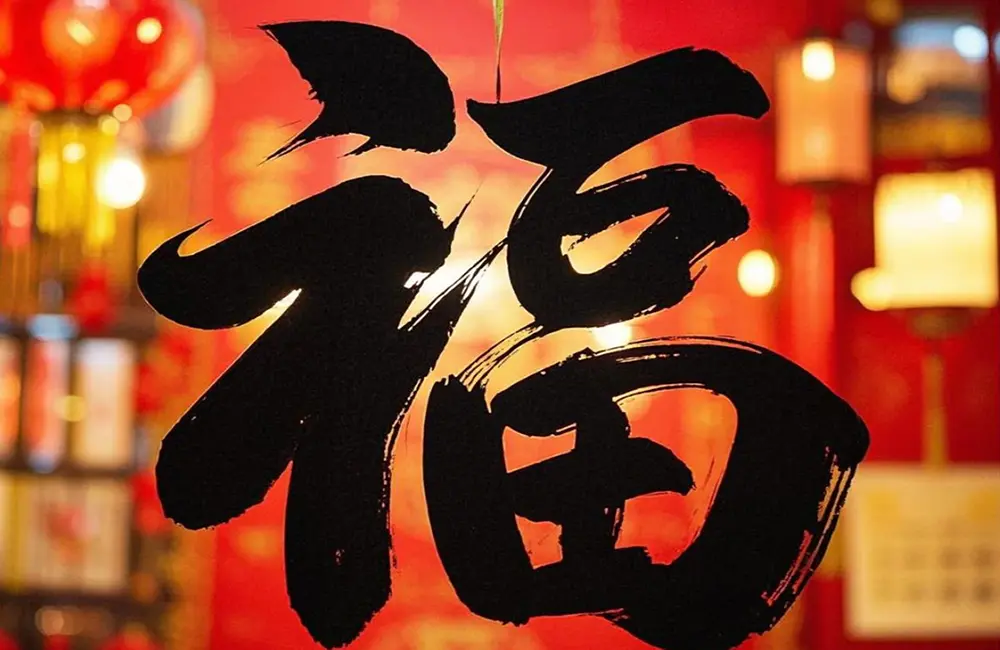
In the rich tapestry of traditional Chinese culture, the crimson Fu character (福)—symbolizing fortune—transcends mere decoration to become a vessel of profound symbolic weight. It is believed to govern the very currents of luck that flow into a dwelling. As the Chinese New Year approaches, families engage in the delicate ritual of positioning this auspicious glyph, not randomly, but with the precision of an ancient ceremony designed to invite prosperity and joy. Yet, to truly harness this luck, one must navigate the nuances of its placement, for every angle and location whispers a different intent.
The journey of fortune begins at the threshold. The main entrance serves as the grand gateway to a home’s energy, and here, the Fu character must always stand proud and upright. This vertical alignment invokes the blessing “Fu Ru Dong Hai,” wishing for fortune as vast and boundless as the Eastern Sea. By keeping the character erect, you are symbolically opening your arms to receive dignity and grace. To invert it here is to risk a great misunderstanding—some believe an upside-down ‘Fu’ on the main door mimics the pouring of water, suggesting that the family’s luck might be cast outward rather than gathered within.
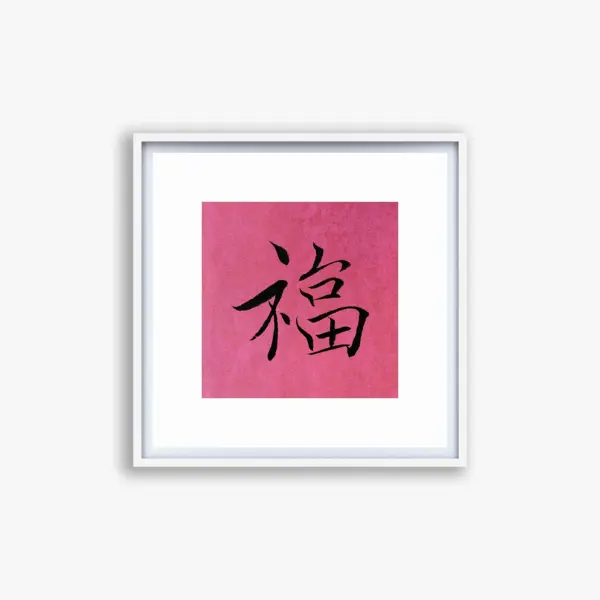
If you’re looking for a traditional Chinese “Fu” character wall art, explore this piece written in three distinct calligraphy styles.
Once across the threshold, however, the rules soften into a clever linguistic play. Within the intimate sanctuary of the home—upon kitchen walls, pantry doors, windows, and chests—families often choose to paste the character upside-down. This is no accident of haste, but a pun on the Chinese word for “upside-down” (dào倒), which sounds identical to the word for “arrive” (dào到). Thus, an inverted Fu character becomes a silent, joyful proclamation that “fortune has arrived.”
This tradition finds its most charming expression on objects associated with containment and flow. Adorning refrigerators and cabinets with an inverted Fu character suggests a hoarding of abundance, a wish that the family’s sustenance remains forever plentiful. Even trash bins and water jars bear this mark; the inversion signifies that even as waste is discarded or water poured out, the essence of prosperity remains firmly rooted in the household, never to be depleted.
The ritual is also bound by the rhythm of time and scale. Tradition dictates that these crimson squares be affixed in the golden hours of Chinese New Year’s Eve, just before the sun dips below the horizon, ensuring blessings arrive with the very first light of the new cycle. The movement is choreographic: one begins at the outermost gates and works inward, physically guiding the luck deeper into the heart of the residence. Similarly, the size of the characters tells a story of refinement; a grand Fu character guards the entrance to capture vast energy, while progressively smaller versions trickle into the inner rooms, signifying that blessings, once captured, permeate every corner with a gentle, pervasive presence.
Ultimately, these customs are far more than superstitious mandates; they are the embodiment of a cultural philosophy that champions hope, unity, and the active attraction of positive energy. Each carefully placed sheet of paper is a testament to the family’s optimism for the future. So, as you smooth the red paper onto your door this season, take a moment to revere the ancient wisdom it carries. In that simple act lies a timeless invocation for boundless happiness and wealth to find their way home.
Continue to read the different handwritten styles of Fu character here.